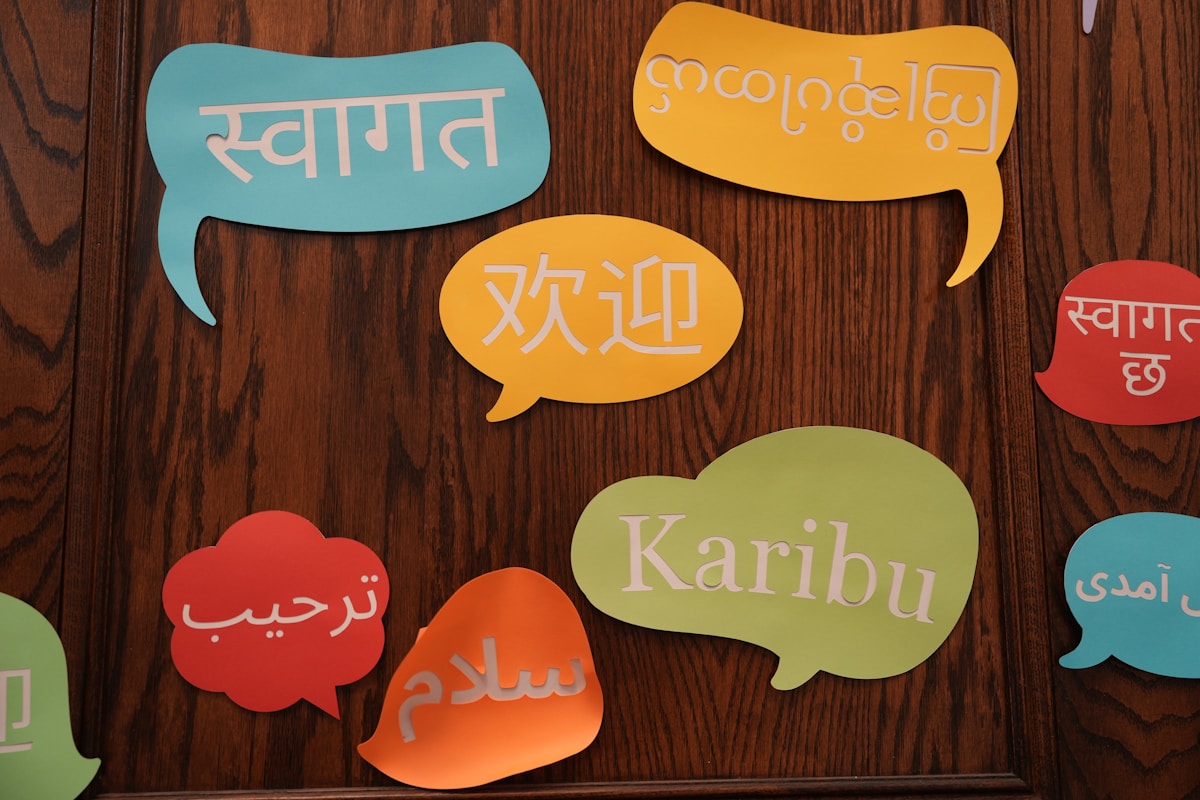
Tenerife welcomed around 7.4 million tourists in 2025 (FRONTUR, ISTAC). Its two biggest foreign markets are the United Kingdom and Germany, and in neither is Spanish the first language.
Yet there are still tourism businesses with a Spanish-only website. It's like having a shop with a sign most of the people walking past can't read.
The numbers you can't ignore
What the official 2025 figures say, from ISTAC's Tourist Expenditure Survey (Promotur's report by market; more reference figures on the data page):
- Tourists living in the UK: 37.1% of tourists (aged 16 and over) visiting Tenerife → search in English
- Tourists living in Germany: 11.5% → search in German
- The UK, Ireland and Germany together: about 6 in 10 foreign tourists in Tenerife (by country of residence, not mother tongue)
With a Spanish-only website, most of those visitors can't read you in their own language. English reaches the British, the Irish and most Scandinavians; German adds the island's second-biggest foreign market.
And language weighs on the decision to buy. In a 2020 CSA Research survey of 8,709 consumers in 29 countries, 76% preferred to buy products with information in their native language and 40% said they never buy from websites in other languages. It's a global survey about online shopping, not a Tenerife study, but it points the same way: someone who can't understand your site will find it very easy to leave for another.
Which businesses need a multilingual website?
In practice, any business in Tenerife that serves (or wants to serve) European tourists:
- Restaurants — especially in tourist areas (Adeje, Arona, Puerto de la Cruz)
- Hotels and apartments — to capture direct bookings and reduce OTA commissions
- Activities and excursions — surfing, diving, hiking, whale watching
- Estate agencies — if you sell or rent to foreign buyers
- Clinics and health services — dental tourism, dermatology, wellness
- Shops and retail — crafts, local fashion, Canarian products
- Car rental and transport services
If your business is one of the first three, I have pages on what each sector needs: websites for restaurants, websites for hotels and websites for excursions in Tenerife.
How to properly implement a multilingual website
Running your text through Google Translate isn't enough. A professional multilingual website requires:
1. Professional translation, not automatic
Machine translations are obvious. A German tourist reading a robotic translation loses trust immediately. Invest in translations that sound natural in each language.
2. Browser language: suggest, never redirect
It's tempting to detect the browser language and show that version straight away, but Google asks you to avoid automatically redirecting users from one language version of a site to another, and recommends a different URL for each language rather than deciding it with cookies or browser settings. What works:
- One URL per language (for example /en/ and /de/), which Google can crawl and index.
- A language selector that's always visible, with each language written in its own language (English, Deutsch), and every page linked to its versions in the other languages.
- At most, a suggestion: if the browser is set to German and the visitor lands on the Spanish version, you can show a discreet notice with a link to the German version. Never an automatic redirect.
3. Differentiated URLs or language parameters
For SEO, it's important that Google can index each language version. Options: subdomains (en.yourdomain.com), subdirectories (/en/) or parameters. Whatever you use, make sure you have correct hreflang tags.
Google's rules for making hreflang work are few and specific (localized versions guide):
- Each version lists itself and all the others. If the English page points to the German one but the German page doesn't point back, it fails.
- x-default is for the page shown when the visitor's language doesn't match any of your versions.
- One method is enough: tags in the HTML, HTTP headers or the sitemap.
Another detail that surprises people: Google works out a page's language from its visible content, not from the lang attribute or the URL. It also warns that translating only the generic text (menus, footer) while leaving the main content in one language can lead to the same content showing up in search results in several languages. The English version has to be genuinely in English, top to bottom.
4. Adapted content, not just translated
Each audience asks you different things. Adapt your content's emphasis to what each one asks: ask your own customers from each market what brings them to Tenerife and what they want to know before booking, and put that near the top of their version.
5. SEO in each language
Each language version needs its own optimised keywords. "Restaurante Tenerife" in Spanish, "restaurant Tenerife" in English, "Restaurant Teneriffa" in German. Literal keyword translations don't always work.
What to translate first if you can't do it all
You don't need to translate the whole site on day one. Start with what decides a booking and leave the rest for later:
- The page that sells: the menu, the rooms, the activities or the services, with prices.
- How to get there: address, meeting point, parking and opening times.
- The terms: cancellation, deposit, what's included and, for a restaurant, allergens.
- Contact: the form and the pre-filled WhatsApp message, in the page's language.
- The home page, with one clear sentence on what you do and who for.
- The blog and long texts, last.
And outside your site: reply to Google reviews in the language they were written in. That's what the next customer from that country reads.
How to get a good translation without a big agency
- Write clear, short Spanish first. Anything muddled in Spanish comes out worse in translation.
- Make a glossary of names that don't get translated (Teide, Los Gigantes, Anaga, your dishes or your routes) and how the island is spelled in each language: Tenerife in English, Teneriffa in German.
- Translate by hand, or use machine translation as a draft, never as the final version.
- Have a native speaker check the practical parts: prices, allergens, meeting point, times and cancellation.
- Watch the formats: 12/10 means 12 October in Spain or the UK, but 10 December in the United States. Write the month in words and phone numbers with the +34 prefix.
- Keep the versions in step: when you change a price or opening time in Spanish, change it in every language the same day.
The same CSA Research survey found that 65% prefer content in their own language even if it's poor quality. So having the language already counts. But on the practical details a mistake is expensive: a mistranslated meeting point or allergen isn't fixed by good intentions.
Common mistakes
- A widget that translates in the browser. It doesn't create a URL per language, which is what Google recommends, and what it shows is unreviewed machine translation.
- Translating only the menu and footer and leaving the content in Spanish.
- Flags instead of language names. English isn't only spoken in the UK, and German isn't only spoken in Germany.
- Forms, confirmation emails and WhatsApp messages only in Spanish, even though the page is translated.
- Different prices or opening times between versions because only one got updated.
- Redirecting automatically by language: Google asks you to avoid it. Suggest the right version and let the visitor choose in one tap.
- A language selector hidden in the mobile menu, where nobody finds it.
Why the ROI works once you do the maths
The multilingual case is also a numbers case. If your hotel sells mostly through OTAs, put your figures into the OTA commission calculator (in Spanish) and see how much goes out each year. Every booking a British or German guest makes on your site, in their own language, instead of on Booking, is commission you keep.
Tenerife: the perfect island for multilingual
Tenerife makes it easy: about 6 in 10 foreign tourists on the island come from the UK, Ireland or Germany (2025 ISTAC data, in Promotur's report by market). English and German cover the markets most of them come from.
This means a multilingual website isn't a luxury — it's a basic requirement to compete.
A real case: Santos Barbertop
The website of Santos Barbertop, a barbershop in San Isidro and my first client, is trilingual (Spanish, English and German) for the British and German tourism of the south. With data verified as of 30 September 2026, covering its first three months since launch, it has 6,281 appearances in Google results across three languages and is already surfacing in tourist searches such as "barber near me", "coiffeur homme" or "barbershop in der nähe". I go through all the data and its sources in the Santos Barbertop case study.
How I do it at Teide Digital
Every website I deliver at Teide Digital includes multilingual support as standard. My rule: a language switcher that is always visible, and never an automatic redirect. I take calls in Spanish and English, and reply by message in German, Polish and Dutch.
On my entry plan, the site comes in Spanish and English; if you also need German, the upper plan goes up to three languages.
Because if most of your foreign customers don't speak Spanish at home, your website should speak to them in English at least.
Frequently asked questions
Is English enough, or do I need German too?
Start with English almost every time: people living in the UK were 37.1% of Tenerife's tourists in 2025, and English also works for the Irish and most Scandinavians. German (11.5%) pays off when a visible share of your customers is German. Look at your bookings and your reviews: they tell you where your customers come from better than any average.
Can I use machine translation?
As a draft, yes. As the final version, no: whatever gets published has to be checked by someone who speaks that language, at least prices, times, directions and terms. And remember that Google decides a page's language from its visible text, so the page has to be entirely in that language.
Subdomain, subfolder or one domain per country?
For a local business in Tenerife, subfolders on the same domain (/en/, /de/) are the easiest to maintain. What matters is that each language has its own URL, with hreflang set up properly and a visible selector.
Do I need to translate the blog too?
Not at the start. First, what decides a booking: the page that sells, how to get there, the terms and contact. The blog can wait until the essentials are right in every language.